
In None We Trust
Americans are in the midst of a crisis of trust in news information, in politics and other societal institutions and even more concerning with one another.

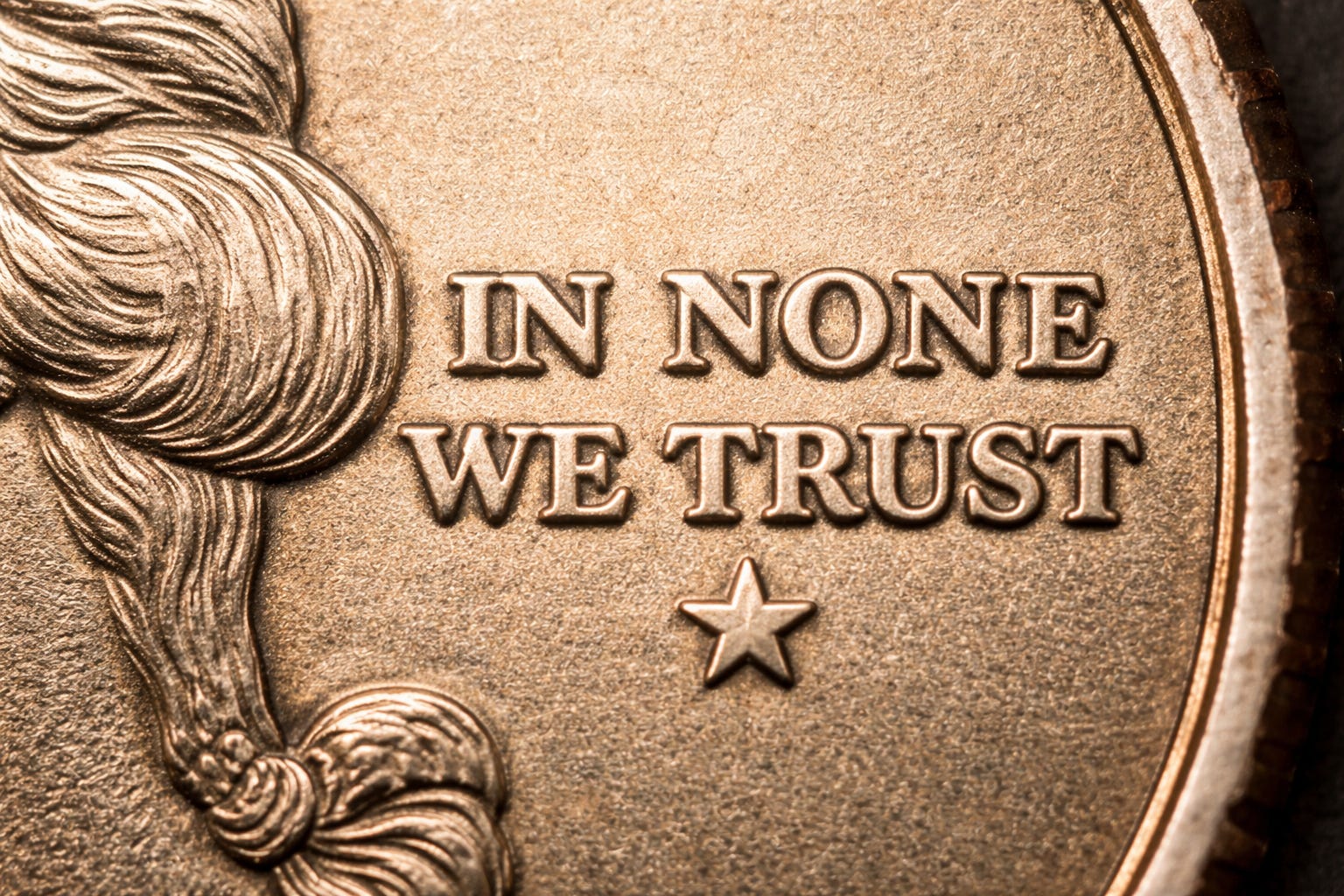
We are in the midst of a crisis of trust. One example —in the war with Iran, President Trump in one moment says the U.S. has won the conflict and the only deal he would accept is one of complete surrender. In the next, the President announces he is sending his Vice-President to lead negotiations of a a ten-point deal framed by Iran’s remaining regime. There is an ongoing open debate as to whether the country should believe what the President actually says or dismiss his proclamations as bluster for bluster’s sake—or to extend more grace—they are negotiation chess move styled means to an end. Whichever the case, the news media typically treats each new social post as “breaking news” in hopes of driving news consumers into their linear or digital viewership arms.
The challenge of course with that approach is the unfortunate fact the news media is suffering from its own “trust issues.” A recent Pew Research Center poll explicitly asked Americans where they first turn for breaking news information and received some interesting results.
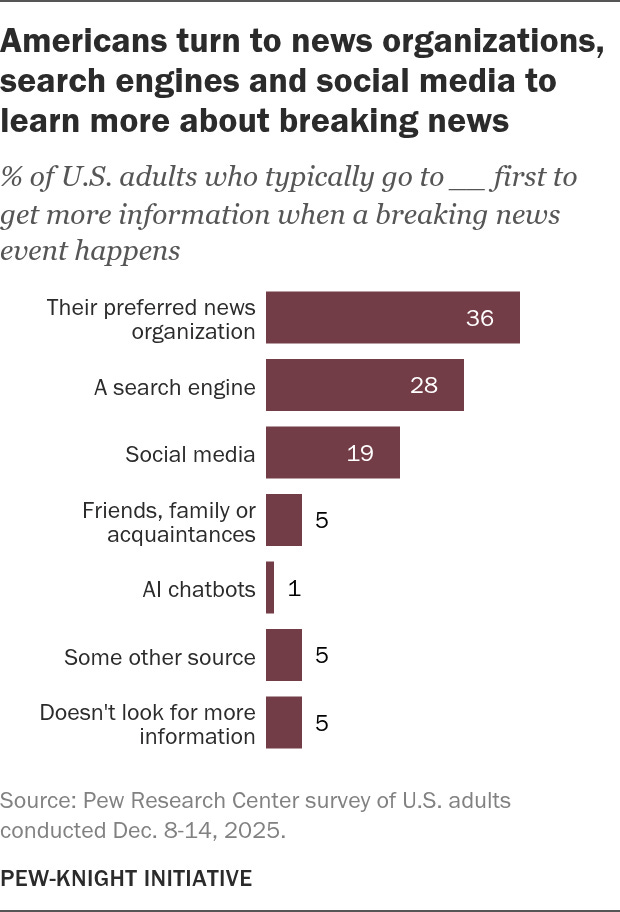
Just 36% of respondents say they turn to their preferred news organization. The other replies suggest further evidence of the scattered and fractured news landscape by leaning on their preferred search engine, social media and for at least one percent of respondents —their go-to AI chatbot. Pew points out that less than a decade earlier 54% of Americans turned to their preferred news organization. It may not be a surprise that the news source divide is more stark demographically.
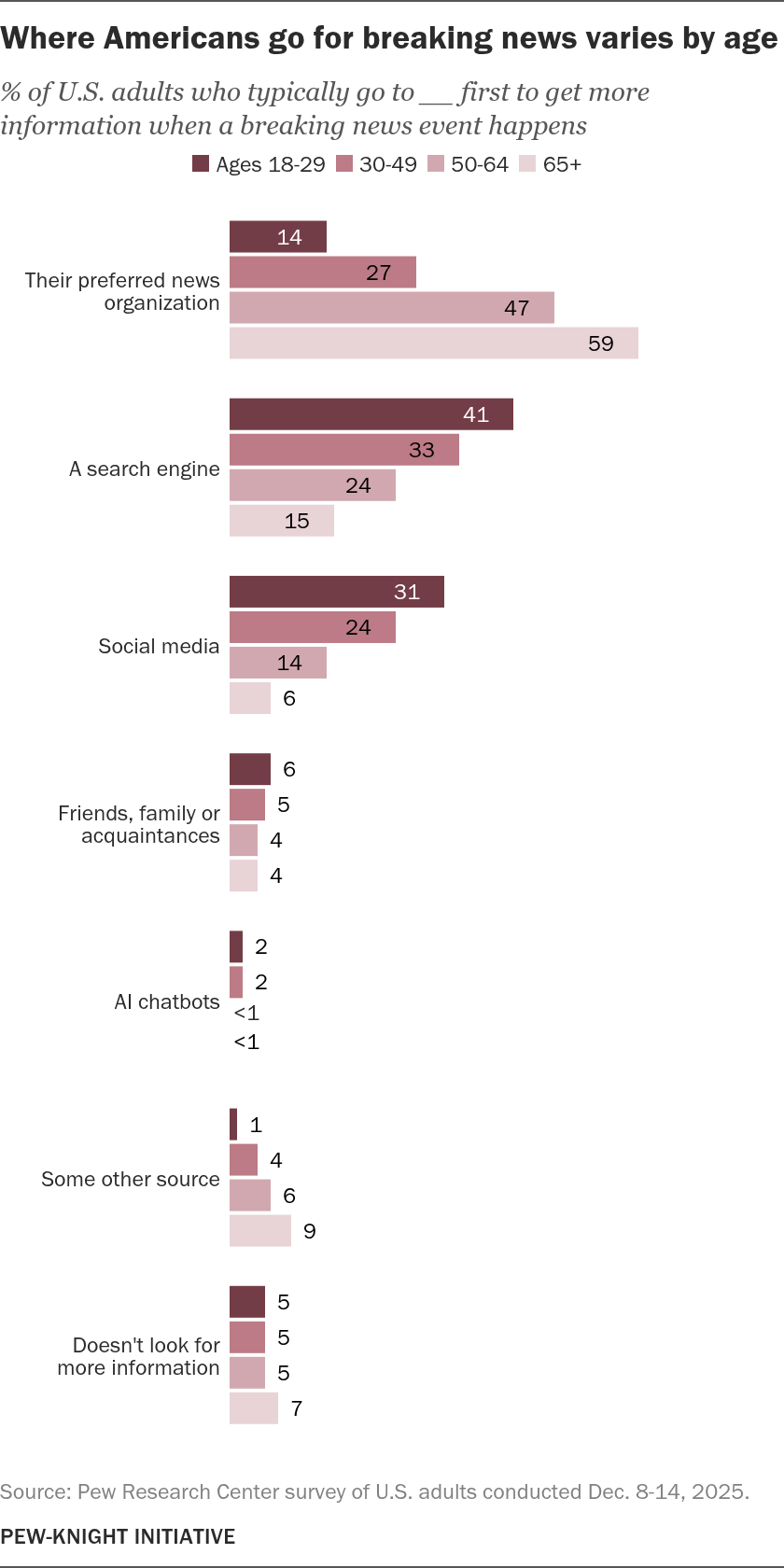
While 14% of news consumers under the age of 29 turn to traditional media, a third of them open their social media feeds and 4 out of 10 let search engines algorithms serve up the details. This trend has upended news organizations’ business models and long-term outlook. But this re-alignment is not happening in a vacuum, nor is mainstream media the only institution with weakening trust-worthiness.
Gallup’s survey of American’s confidence in its pillar institutions shows American distrust at alarming levels across the board. While newspapers and tv news suffer low single-digit level (5-6%) of great deal of confidence, Congress is even lower at just 4%. The lack of confidence in the Presidency is the highest it’s been the last two years than in Gallup’s polling on the question.
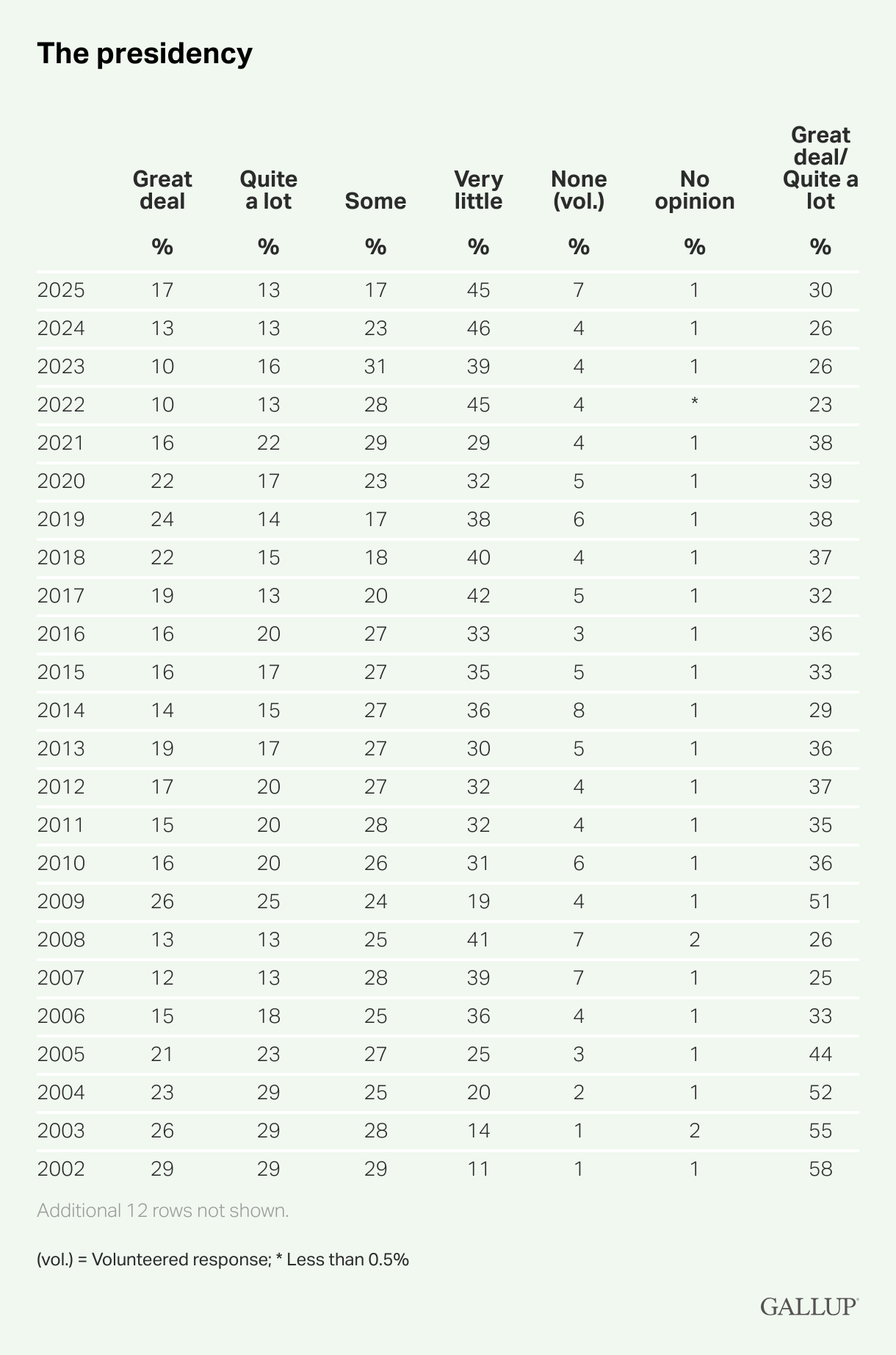
Of all the institutional structures highlighted, only the Military, Science and Small Businesses reach more than 30% of respondents saying they have a great deal of confidence in them. When the public questions pillars like religion, the justice system, and healthcare to care for their needs, we are witnessing more than just a fraying of the seams of the social fabric—society’s very foundation is crumbling beneath our feet.
And as that foundation splinters, an even more disturbing fault line is emerging. Last Spring, Pew Research published a report on American’s Trust in One Another and in similar fashion that too is eroding.
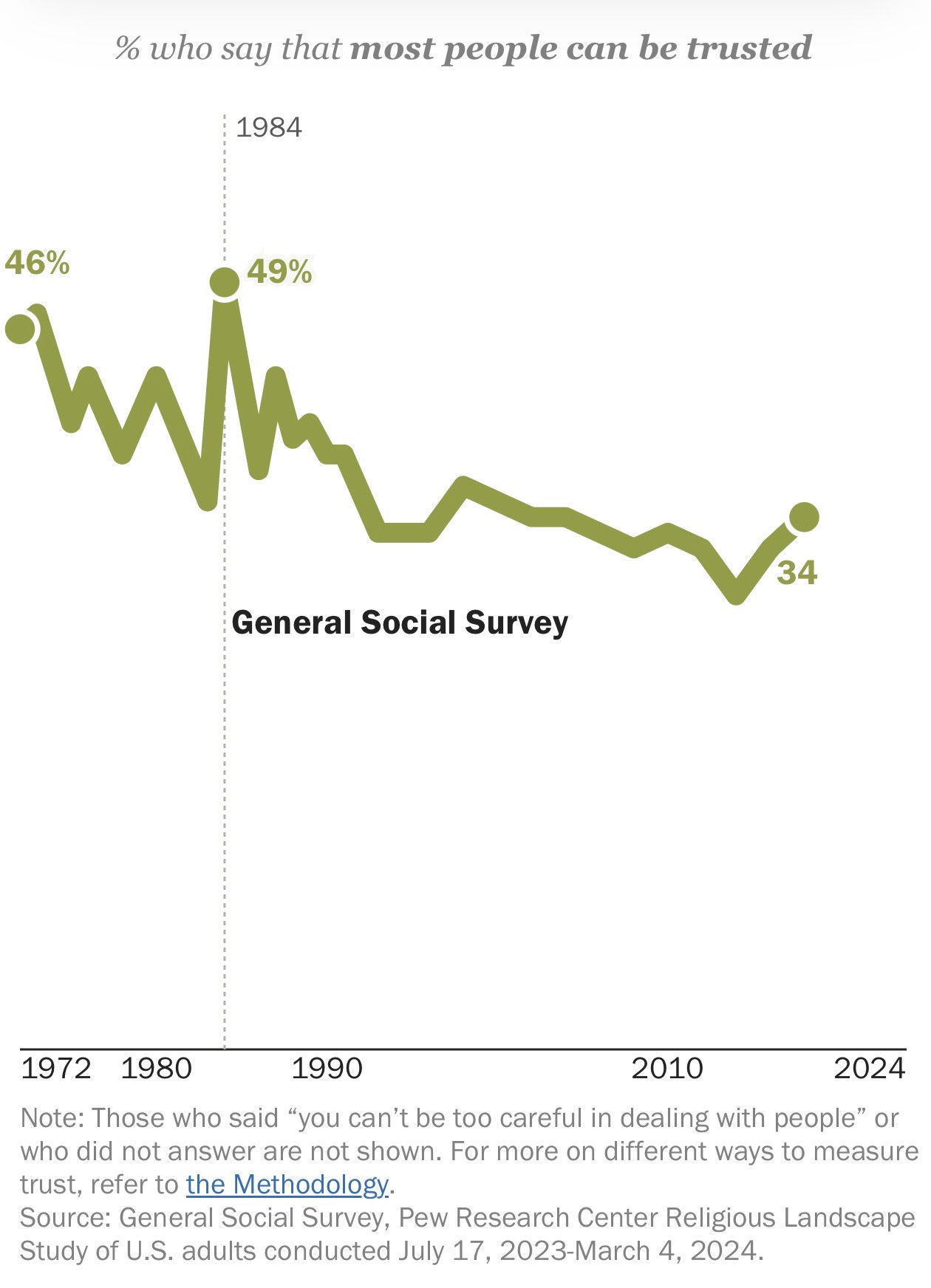
In the span of four decades Americans’ trust in each other has dropped from 49% in 1984 to just 34%. Pew suggests trust is rooted in one’s personal experiences. The scars of life wound the ability to trust. A waterfall of injustices, economic setbacks, opportunities depleted, being left out and feeling left behind all contribute to one’s inward turn toward distrust and outright resentment of each other.
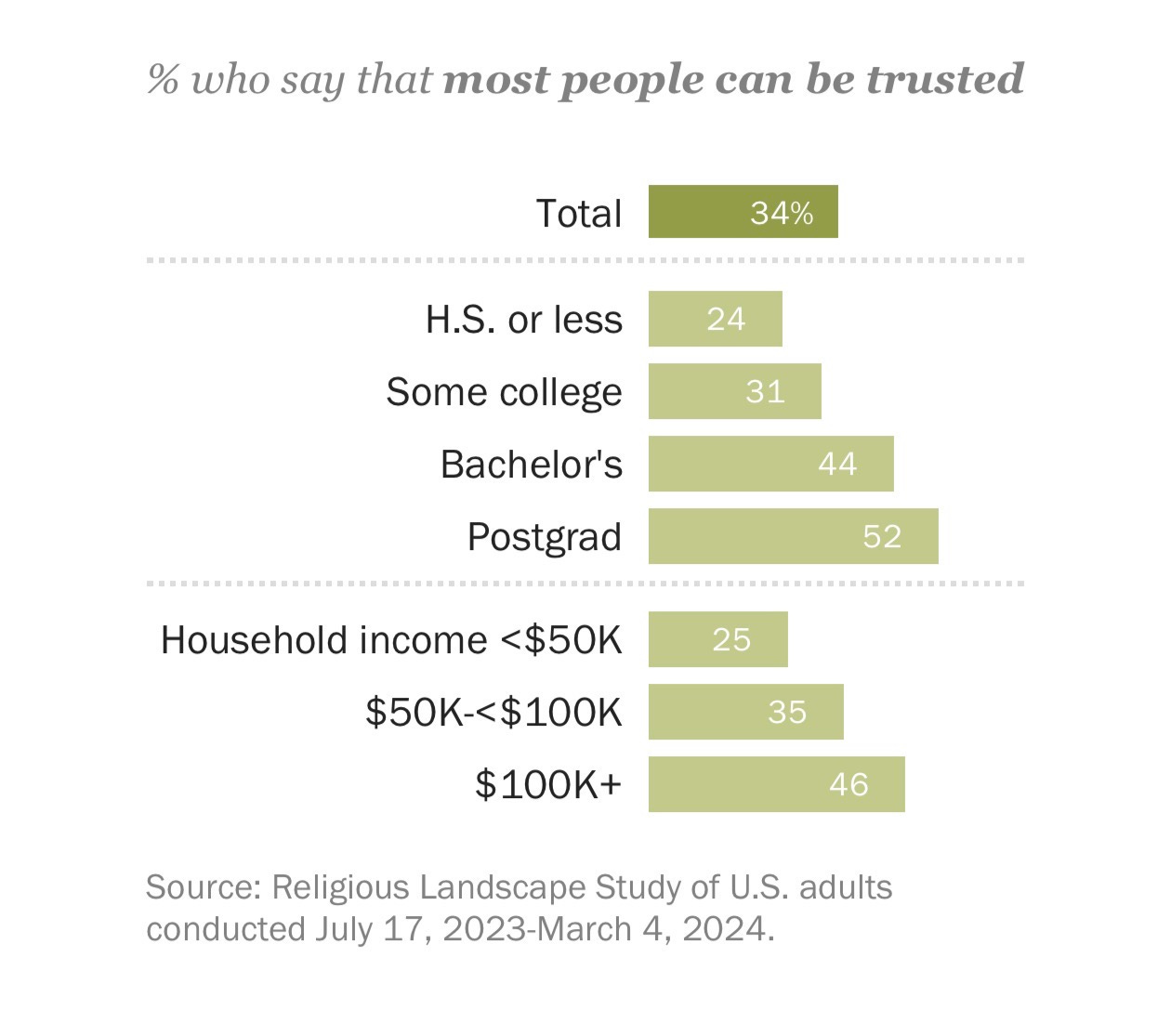
Under that theory, it’s unsurprising that those more affluent with advanced degrees are more likely than those on the lower rungs of the American Dream to say “most people can be trusted.” More access to opportunity is likely to lead to better outcomes and fewer trust issues. That is likely why there is nearly a 20 point gap between Black/Hispanic respondents and their White counterparts.
Fewer Americans feeling capable of obtaining the American Dream leads to more Americans distrusting those who they perceive as having attained it. We are more likely to guard what we have and resent others trying to grab at the crumbs, too.
Pew pinpoints why this growing erosion of trust matters:
“Trust makes it easier for people to work together to solve problems…higher trust is associated with better -functioning democratic institutions.
In short, overall levels of social trust seem to go hand in hand with many features of a healthy society.”
That is why what the President —any president says—matters. It’s why the exhibition of our institutions working on behalf of citizens and not their own self-preservation matters, It is why, as Martin L. King, Jr. famously said, “injustice anywhere is a threat to justice everywhere” matters.
Trust is hard earned and is easily lost. Given our current state it’s no mystery why so few people have so little of it left. The harder puzzle to solve is how do we collectively put the pieces back together before its too late?